
Petition for Provenance Disclosure, Independent Assessment, and Safeguarding of the Ziwiye Gold Plaques
A public appeal by the Forensic Archive of Iran
Note on scope: This petition is based on publicly available reporting. The Forensic Archive of Iran is not conducting an independent provenance investigation into these objects and has reached no conclusion that they were unlawfully excavated, exported, imported, transferred, or acquired.
The case
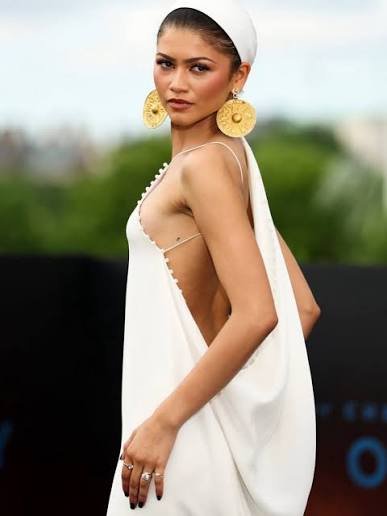
On 5 July 2026, Zendaya appeared at a London photocall wearing earrings incorporating ancient gold plaques described by the jeweller Barron London as “Ziwiye gold medallion plaques, circa 1st millennium BC Iran.”
According to publicly reported information, the earrings were designed by Glenn Spiro in 2018 and acquired by Barron London in 2020. These dates have not been independently verified by the Forensic Archive of Iran.
No complete provenance has yet been made publicly available explaining where the plaques were found, when and under what legal authority they left Iran, who possessed them before 2018, or what documentation accompanied their acquisition and transformation into contemporary jewellery.
These are not minor omissions.
Archaeological objects are not merely decorative materials. Their significance lies not only in their physical form, but also in the archaeological contexts, histories, communities, and systems of knowledge to which they belong.
When ancient objects circulate without a transparent ownership and export history, the public cannot determine whether they entered the market lawfully or whether their circulation may be connected to undocumented excavation, illicit export, trafficking, or the destruction of archaeological evidence.
The Forensic Archive of Iran does not claim that these plaques have been conclusively proven to be looted or unlawfully exported. Rather, we maintain that their publicly undocumented provenance raises serious ethical and evidentiary concerns and warrants prompt, independent, and transparent assessment.
Our requests
We call upon Barron London, Glenn Spiro, and any current owners, custodians, or agents responsible for the plaques to:
Publish the complete known provenance of the gold plaques, including their ownership and collection history, acquisition records, invoices, export and import documentation, documented findspot and archaeological context where known, and all available due-diligence records.
Confirm whether the plaques were checked against relevant stolen-art and cultural-property databases before their acquisition, redesign, loan, commercial promotion, or public presentation.
Suspend any further sale, export, alteration, dismantling, commercial promotion, or use of the plaques as wearable jewellery until their provenance and legal status have been independently assessed.
Permit examination by independent specialists in Iranian archaeology, ancient metallurgy, provenance research, conservation, and cultural-property law.
Cooperate with appropriate law-enforcement, customs, cultural-property, and professional authorities should an independent review identify evidence of unlawful excavation, removal, export, import, transfer, acquisition, or dealing.
Publish the findings of the independent assessment, subject only to legitimate restrictions concerning personal data, security, or active law-enforcement proceedings.
If unlawful removal, export, or acquisition is established
Should credible evidence demonstrate that the plaques were excavated, removed, exported, imported, transferred, or acquired unlawfully, we call for their restitution for the benefit of the people of Iran through a transparent and independently supervised process, with meaningful participation by Kurdish communities connected to the region of Ziwiye.
The Forensic Archive of Iran distinguishes between the people of Iran and the institutions currently exercising state power over them.
Restitution should not automatically require the immediate physical transfer of vulnerable cultural property into conditions where its safety, conservation, accessibility, documentation, or public accountability cannot be guaranteed.
Where immediate return would create a demonstrable risk to the objects, we call for temporary custodianship by an accredited and independent public institution.
Any temporary custodial arrangement should be:
non-commercial;
fully documented;
subject to recognised conservation and security standards;
accessible for independent scholarship;
publicly acknowledged as temporary;
governed by a written agreement recognising that the objects are held for the benefit of the people of Iran; and
reviewed periodically until their safe, accountable, and publicly accessible return becomes possible.
Temporary custodianship must never become a pretext for permanent possession.
Why this case matters
This petition is not an attack on an actress, stylist, designer, or individual wearer. Public attention should not be used to substitute celebrity blame for serious provenance research and market accountability.
The central issue is the transformation of archaeological material into a luxury commodity without a publicly demonstrated chain of lawful custody.
The public appearance of these plaques offers an opportunity to establish a better standard: ancient cultural objects should not be worn, sold, altered, or exhibited without transparent documentation explaining how they entered the market.
Authentication is not the same as provenance. An assessment of an object’s age, material, or stylistic attribution does not establish its ownership history, legal export, or lawful transfer.
Iranian cultural heritage belongs neither to traffickers nor to private luxury markets. Nor should it be treated as the exclusive property of the institutions currently exercising state power in Iran. It forms part of the historical and cultural inheritance of the people of Iran.
We therefore ask the named parties to disclose the available records, safeguard the plaques, facilitate independent assessment, and—where the evidence requires it—support their restitution for the benefit of the people of Iran.
Signed,
Romina Frohar
Founder, Forensic Archive of Iran
16 July 2026
Public Signatories
Pegah A. — Australia
Rachel A. — United Kingdom
Jon Abderhalden — United States
Anonymous Supporter — Austria
Anonymous Supporter — Canada
Anonymous Supporter — United States
Anonymous Supporter — United States
Anonymous Supporter — United States
Nima Aria — United States
Shabnam Balouch — Iran
Eric Brooks — United States
Steve Chaddock — Indo-Pacific
Amanda D. — United States
Feidhlim D. — United Kingdom
Samuel Drury — United Kingdom
Armin Eslami — Iran
Diana Frohar — United States
Hami Frohar — United States
Maisie Gill — United Kingdom
Bahareh H. — United Kingdom
Patricia Jansma — Netherlands
Jaklin K. — Australia
Jasmine Keough — United States
Jonas MacArthur — Sweden
Joanne McCafferty — Scotland
Naji N. — United States
Shohreh S. — Iran
Azadeh Salehi — Iran
Hasan Salehi — Sweden
Luka Samardžić — Netherlands
Emily T. — United States
Yvette W. — Tasmania, Australia
Alan Young — Hawaii
Sign the Petition
Add your name in support of the petition calling for full provenance disclosure, independent assessment, and the safeguarding of the Ziwiye gold plaques for the benefit of the people of Iran.
Your email address will be used only to verify and administer your signature and will not be published.